ELECTRON MICROSCOPY APPLICATIONS

Semicondutors

Scanning electron microscopy (SEM), in combination with focused ion beams (FIB), is an ideal technique for keeping up with the rapid evolution of the semiconductor industry, offering analytical capabilities with high levels of precision.

The semiconductor industry is in a relentless race where the goal is high integration, high density and miniaturization of logic devices. This has led to the development of new technologies, such as 3D integrated circuits, which allow broad functionalities to be integrated into devices that are increasingly smaller, faster and with lower power consumption.

However, these more complicated integrated circuits require more sophisticated tools for development and prototyping, inspection and failure analysis to analyze or target areas of interest.

Fault analysis in integrated circuits

The semiconductor industry continues to reduce the size of electronic devices. Currently, cutting-edge technology is based on integrated circuits with 14 and 10 nm manufacturing processes and 7 nm node technology still in the development phase, but very close to commercialization. TESCAN offers a complete series of microscopes, instruments and accessories ideal for fault analysis in state-of-the-art integrated circuits.

TEM image of a finned sheet prepared from a 14 nm chip by top-to-bottom thinning

Circuit Modification

Circuit modification is a common technique used in the debug phase of integrated circuit design. Most of these applications are performed using FIB systems equipped with a Gas Injection System (GIS). This combination allows very precise milling and material removal in specific locations, as well as the deposition of conductive or insulating contacts.

An Intel processor with 14 nm node technology. Side view (“fin cut”) of a blade during thinning; The final blade was prepared just in the middle of a finned sole (thickness less than 20 nm)

Ball Grid Array (BGA)

It is a chip packaging technology that consists of an arrangement of solder balls located at the bottom of a chip package. BGAs were developed as a response to the trend that exists in the semiconductor industry towards miniaturization of integrated circuits and whose objective is greater integration, greater density and better functionality.

Cross section of a 400 μm diameter solder ball made in 4 hours using Xe Plasma FIB and Rocking Stage for a curtainless surface

Paths through Silicon​

Through-Silicon Vias (TSVs) are an advanced on-chip 3D interconnect technology crucial for on-chip 3D integration packages. TSVs vertically interconnect layers of chips or dies, improving electrical performance, reducing power consumption and the shape of 3D integrated circuits.

Magnified image of a Cu TSV showing the weld bump, passivation layer, mold compound and cladding oxide layer

Connection wires

The use of ultra-thin copper and gold wires remains the most widely used method for creating interconnections on high-density chip modules in the microelectronics and semiconductor industries.

One of the reasons is that automatic cable joining procedures are very reliable and provide high yields. The highest quality in terms of uniformity of cable properties is required; It is desirable that the cables have a homogeneous chemical composition and stable mechanical properties. Such cable properties can be changed or affected by the heat applied during the process of soldering the cables to the cable pads. The area of ​​wiring affected by heat becomes mechanically weaker, which can disrupt cable loop formation and stability.

Cross section of spherical links embedded in resin

Screens

Monitor development has progressed rapidly in recent years, resulting in high-quality touchscreens that deliver sharp, bright images, wide viewing angles, and vivid colors.

Back milling of a large surface TFT panel (more than 300 µm in depth) carried out with FIB plasma

MEMS

Microelectromechanical systems (MEMS) are a technology that can generally be defined as miniaturized mechanical and electromechanical elements typically made with Si substrate and manufactured using photolithography and chemical printing or etching.

Deep trench milled in MEMS with FIB plasma

Batteries

A huge amount of research in the battery industry takes place every day to develop the energy storage systems of the future, a task that continues to be one of today’s most relevant technological challenges. This requires analytical techniques capable of differentiating chemical states with high sensitivity and high spatial resolution.

Correlative images showing TOF-SIMS lithium distribution maps overlaid on FIB secondary electron images for fully discharged (left) and fully charged (right) cathode material. The total field of view is 8 μm.

TESCAN equipment for SEMICONDUCTORS

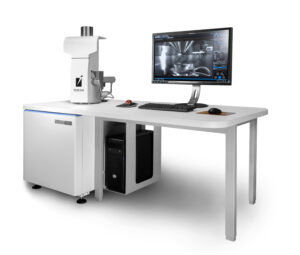
TESCAN VEGA 4

Analytical SEM for routine materials characterization, research, and micrometer-scale quality control applications.

TESCAN AMBER 2 X

A unique combination of Plasma FIB and fieldless UHR FE-SEM for multi-scale materials characterization.

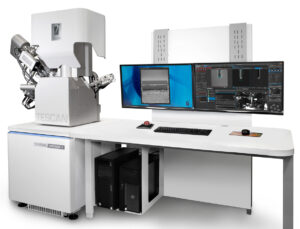
TESCAN SOLARIS

Advanced nanofabrication bench for your research laboratory.


TESCAN SOLARIS X

A Plasma FIB-SEM platform for deep sectioning and the highest resolution for failure analysis in microelectronics.

Want to get in touch with us?

If you would like to contact Zeppelin Lusitania, you can do so in several ways and we will respond as soon as possible.

I read and accept the privacy policy: LINK TO PRIVACY POLICY